The hidden costs are real — in staff hours, compliance risk, and the capacity ceiling that keeps your practice from growing.
If you run a third party administration firm, you already know that your work is exacting. Compliance testing, contribution reconciliation, participant account accuracy, Form 5500 preparation all require precision. And, all of it ultimately depends on one thing: the quality and timeliness of the payroll data coming into your office.
That's the part most TPAs don't talk about enough. Because for a significant number of firms, that data is still arriving the same way it did fifteen years ago: as a file. Maybe a CSV. Maybe a proprietary format from a payroll system. Maybe an email with an attachment.
And somewhere between when payroll runs and when that file reaches your team and eventually the recordkeeper, things go wrong in ways that cost you far more than most firms realize.
This post is about those costs. The ones that show up on your staff's timesheets. The ones that show up on your clients' Form 5500s. And the ones that show up as a ceiling on how many plans your firm can actually administer without adding headcount.
The Hidden Work of Manual 401(k) Data Reconciliation
Ask a TPA firm how long it takes to process payroll data for a plan, and you'll often get an answer that describes the best-case scenario. Data comes in clean, it maps correctly, it loads without exceptions, contributions go out on time.
That's not the scenario that consumes your team's time. The scenario that consumes your team's time is everything else.
A new hire wasn't included in the file. A deferral change didn't make it through. The contribution amounts don't reconcile against what the recordkeeper received. A terminated employee is still showing active. The file format changed because the employer switched payroll providers and nobody told you.
Every one of those exceptions requires a human being to catch it, investigate it, correct it, resubmit it, and document it. In a TPA firm managing dozens or hundreds of plans, those exceptions stack up fast. They become the background noise of every payroll cycle, the thing that makes what looks like straightforward plan administration into something that reliably runs over estimate.
When reconciliation is not performed, it creates the possibility that errors may exist in participants' accounts. Underfunding of participant accounts can result in penalties and interest; overfunding can force the employer to make similar contributions to other participants if not rectified. That level of consequence means your team cannot afford to skip the reconciliation step, no matter how long it takes.
The hidden cost of manual payroll data transfers is not just the time it takes when things go right. It is the time it takes when things go wrong, multiplied by the number of plans in your book.
What 401(k) Payroll Reconciliation Costs TPAs in Staff Hours
There is no industry-wide published benchmark for how long manual payroll-to-retirement reconciliation takes per plan per cycle. What there is, consistently, is the experience of TPA firms who have moved away from manual processes and can compare before and after.
The pattern is consistent: when payroll data flows directly via API to the recordkeeper, the reconciliation step goes from a regular workflow task to an exception-only intervention. Staff who were spending meaningful time every payroll cycle on data matching, error resolution, and resubmission now spend that time only when something genuinely unusual happens.
For a firm managing 100 plans with bi-weekly payroll cycles, that difference compounds quickly. Even if manual reconciliation for a clean cycle takes 20 minutes per plan, that is 2,000 staff minutes — more than 33 hours — every two weeks just on routine data processing. Add exceptions, and the real number climbs significantly.
That is not time your team is spending on plan design, compliance strategy, or the things that actually differentiate your firm. That is time spent moving data from one place to another and checking whether it arrived correctly.
Compliance Risk: What TPAs Lose to Manual 401(k) Data Errors
The most serious consequence of manual data transfers is not the time cost. It is what happens when the data is wrong and nobody catches it fast enough.
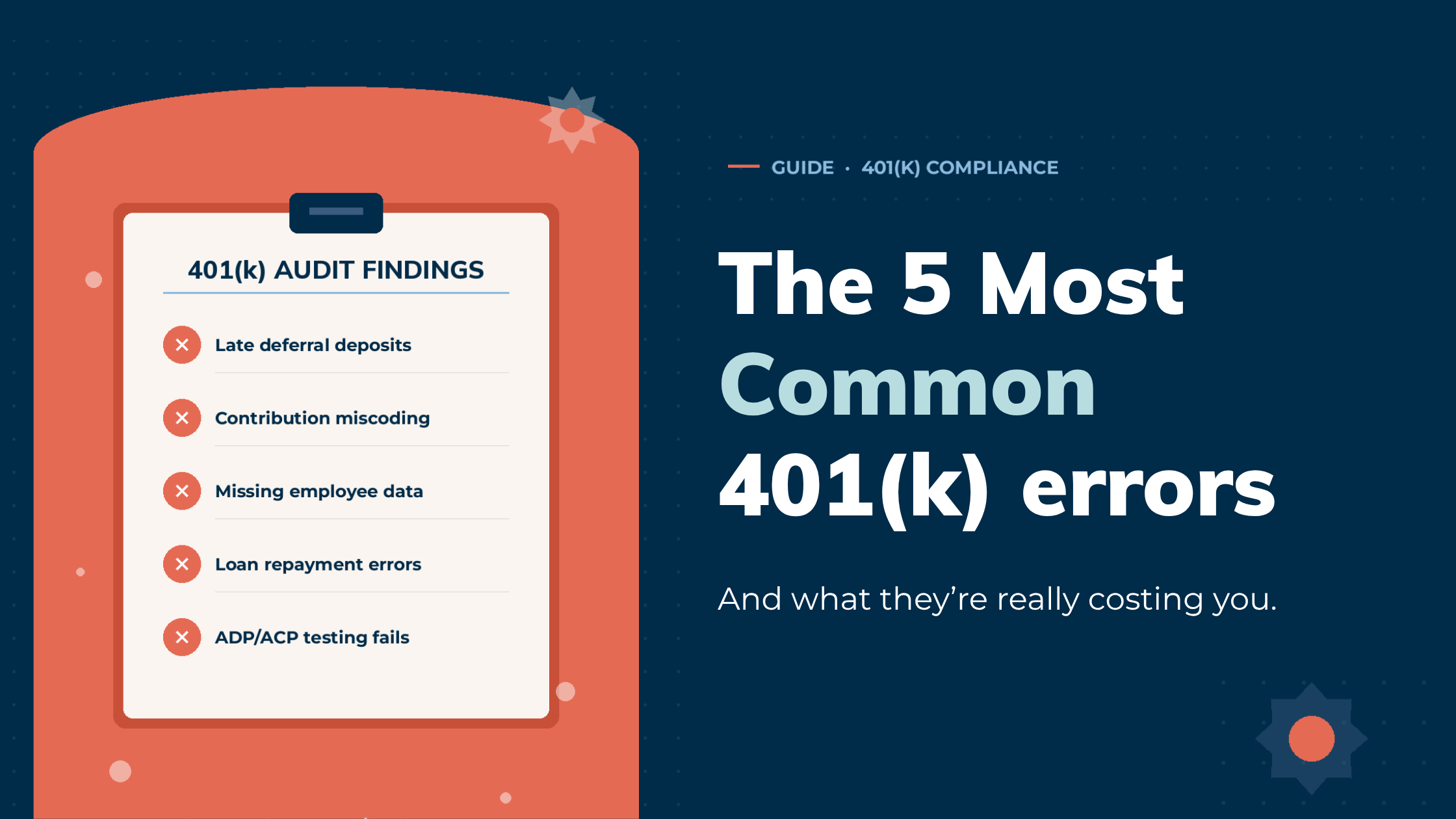
According to DOL ERISA enforcement data, investigations consistently end in corrective actions, fines, and penalties for plan sponsors and fiduciaries — with deficiencies most commonly tied to participant data and contribution handling. Those are not numbers about bad actors or reckless plan sponsors. They are numbers about plans where the data workflow introduced errors that compounded into compliance failures.
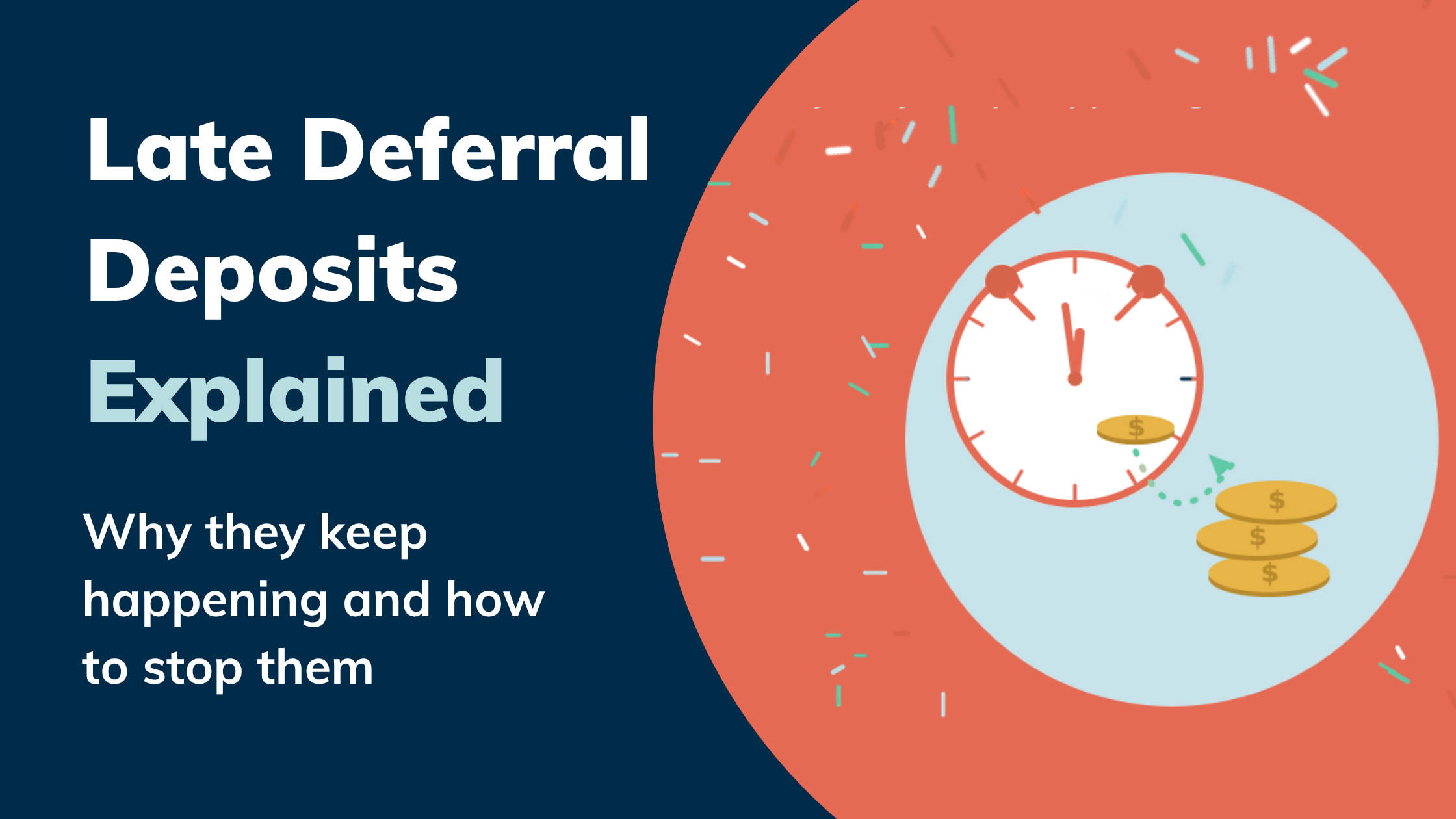
The most common and most preventable of those failures is the late deferral deposit. Under DOL rules, employee deferrals must be deposited as soon as they can reasonably be segregated from employer assets. When the data handoff between payroll and the recordkeeper is manual, delays are built into the process. The file has to be generated. It has to be reviewed. It has to be transmitted. The recordkeeper has to process it. Exceptions have to be resolved.
Every one of those steps adds time. And in a world where a late deposit is a prohibited transaction under ERISA, time is not something you have to spend casually.
The consequences are well established: a 15% IRS excise tax on lost earnings, mandatory correction through the DOL's Voluntary Fiduciary Correction Program, disclosure on Form 5500, and the possibility of a 20% additional penalty if an uncorrected violation surfaces in a DOL audit. Your clients bear the legal exposure, but your firm bears the relationship damage.
In most cases, plan sponsors are responsible for a TPA's errors and could be sued by plan participants and the Department of Labor. That dynamic makes data accuracy not just an operational concern but a liability concern. Every manual step in the payroll data workflow is a place where an error can originate.
SECURE 2.0 Made 401(k) Data Accuracy Higher Stakes for TPAs
The compliance pressure on payroll data accuracy intensified with SECURE 2.0. The automatic enrollment mandate for newly established plans took effect January 1, 2025. Auto-escalation. Expanded eligibility for long-term part-time employees. More first-time plan sponsors entering the market, many of them small employers without dedicated HR staff who will lean heavily on their TPA to make sure everything works correctly.
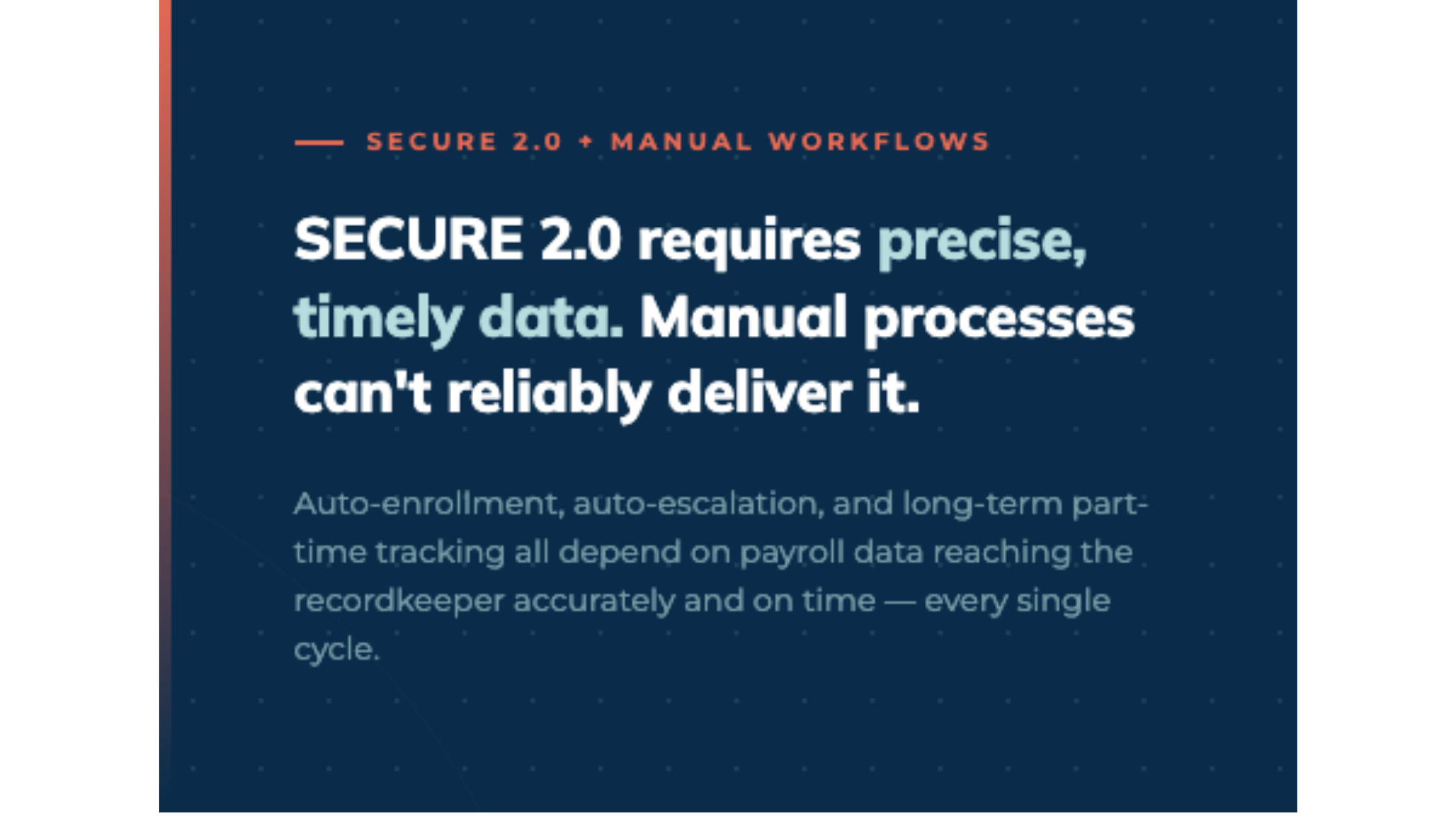
Each of those provisions depends on accurate, timely payroll data reaching the recordkeeper. Auto-enrollment only functions correctly if new employee data flows without gaps or delays. Long-term part-time employee tracking only works if hours data is consistent and current. Auto-escalation only operates as intended if the payroll system and the recordkeeper are synchronized.
For TPAs managing plans under SECURE 2.0's new requirements, a manual data workflow is not just inefficient. It is a structural mismatch between what the regulations require and what the process can reliably deliver.
The plans most at risk for SECURE 2.0 administrative failures are exactly the ones where payroll and retirement data still travel through a human being and a file format before reaching the recordkeeper.
Why Manual 401(k) Workflows Don't Scale for TPA Firms
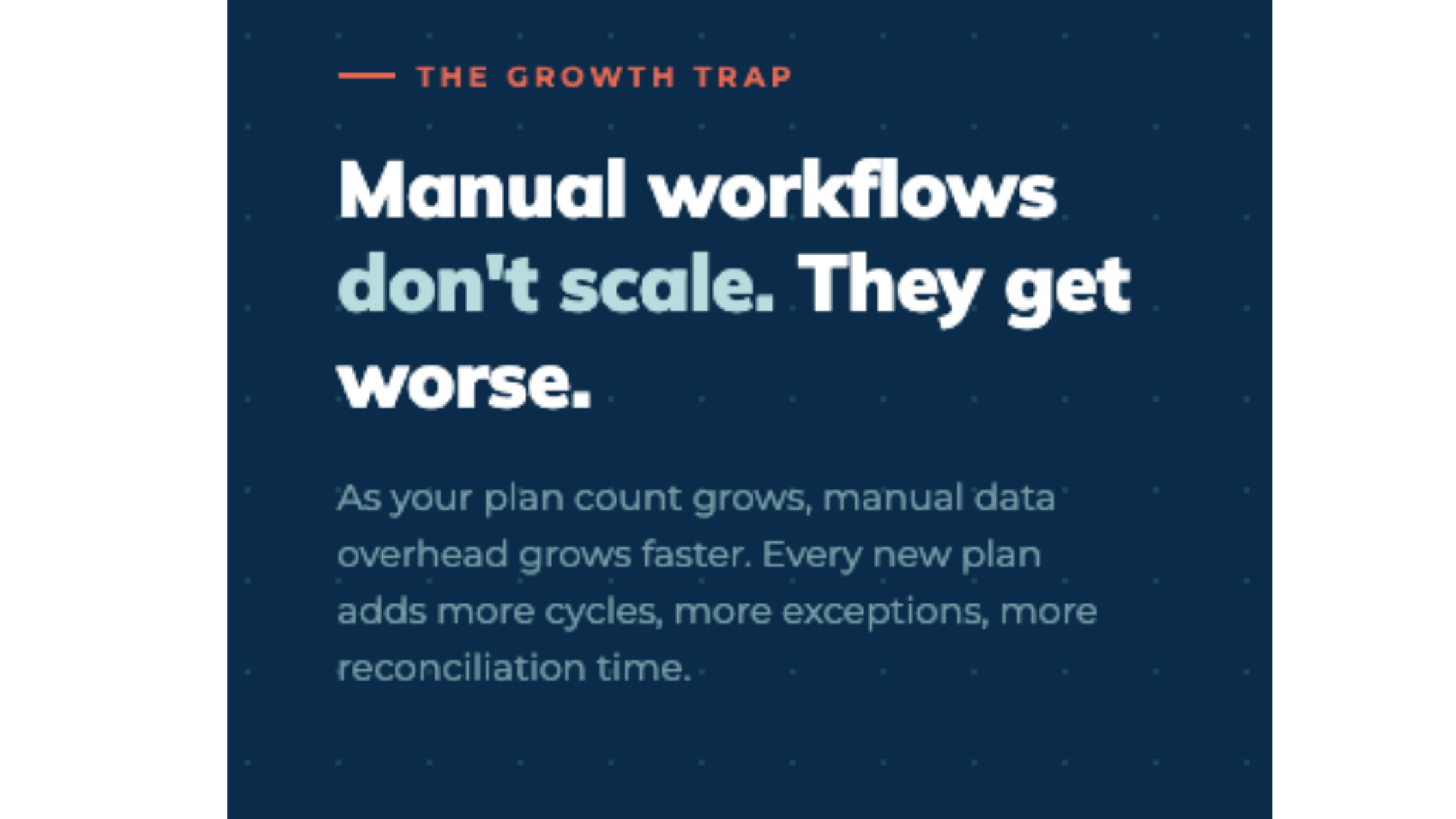
Here is the dynamic that catches TPA firms by surprise as they grow: manual payroll data workflows do not scale proportionally. They scale worse than proportionally.
When you manage 20 plans, manual reconciliation is manageable. Your team knows every plan. They know which payroll systems produce clean exports and which ones require manual adjustment. They know which recordkeepers have quirky file format requirements. The institutional knowledge compensates for the process gaps.
When you manage 80 plans, that institutional knowledge is spread thin. When you manage 150 plans, you are hiring staff not to do more sophisticated work but to handle more of the same manual process. Your growth model becomes: add plans, add headcount, manage margins.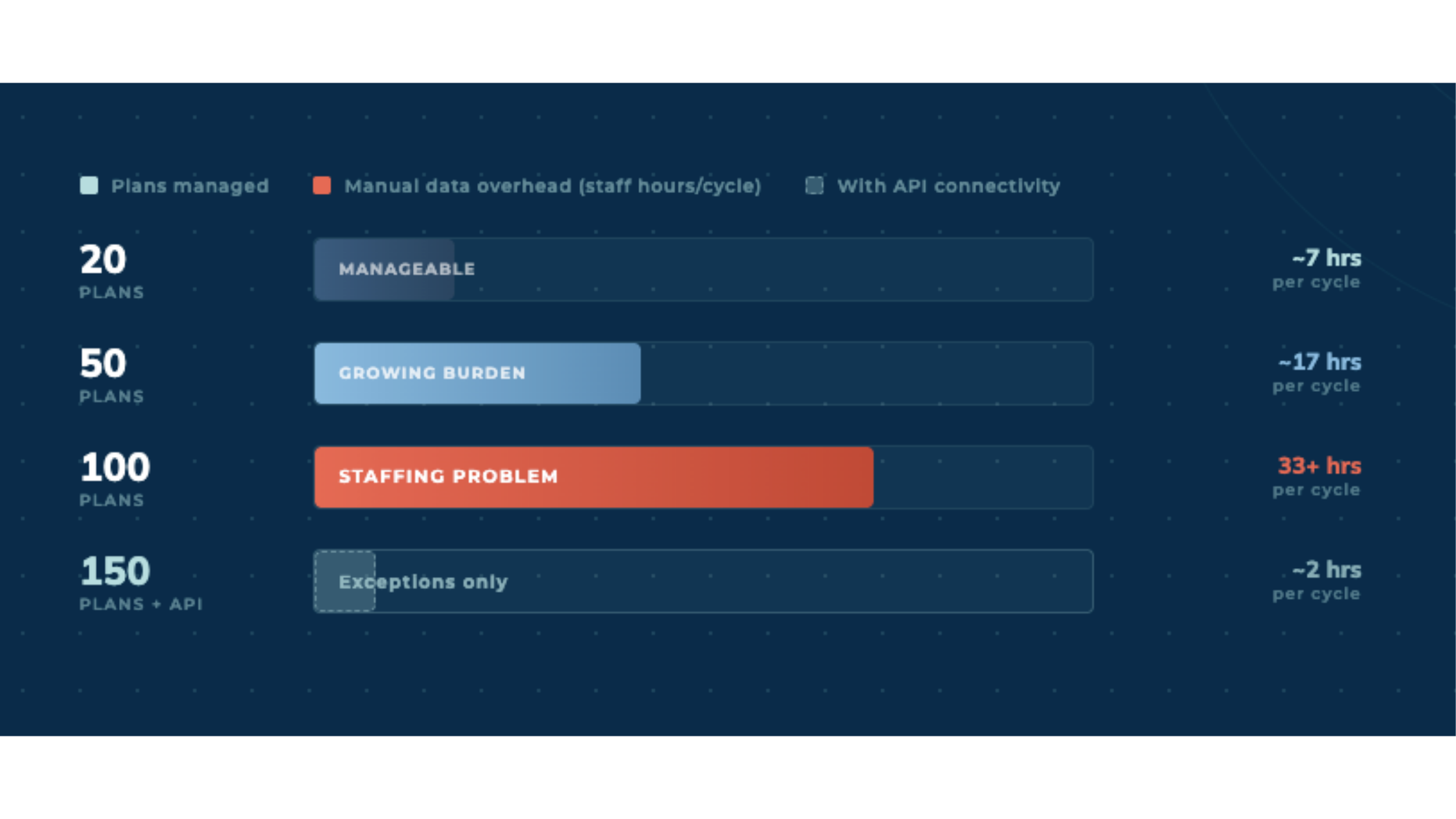
The TPA firms that have moved to automated payroll connectivity describe the difference clearly: instead of adding staff to handle more plans, they add plans and their existing staff handles them. The marginal cost of a new plan goes down significantly because the manual data layer is gone.
That is not a technology outcome. That is a business model outcome. It is the difference between a practice that scales and one that grows by adding overhead.
What 401(k) API Integration Changes for TPA Workflows
A direct API connection between a payroll platform and a retirement recordkeeper removes the manual data transfer layer entirely.
When payroll runs, enrollment data, deferral amounts, contribution changes, loan repayments, and termination information flow automatically to the recordkeeper via direct API. There is no file to generate, no portal to log into, no response file to review, no human touching contribution data between the payroll system and the plan.
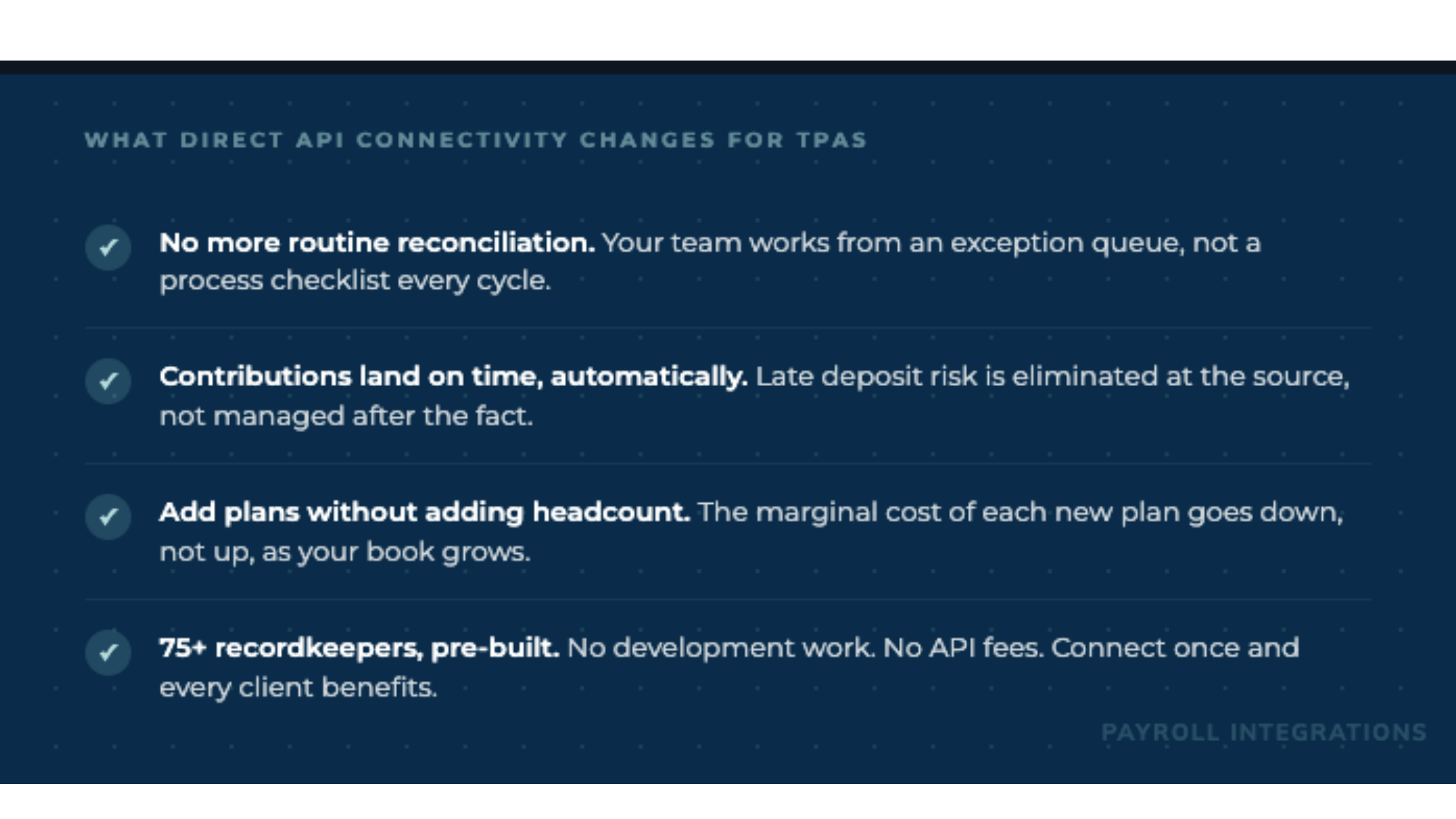
For TPAs, the practical change is this: instead of routine reconciliation work on every plan every cycle, your team works from an exception queue. When something genuinely unusual happens, a human investigates. Everything else moves without intervention.
Payroll Integrations currently connects 150+ payroll partners to 75+ recordkeepers via direct API, including Fidelity, John Hancock, Principal, Voya, Empower, and Transamerica. For TPA firms, this means the plans you administer can have automated data connectivity regardless of which payroll system the employer uses or which recordkeeper holds the plan assets. The connectivity is already built. It does not require development work from your firm or your clients.
Diagnose Your TPA's 401(k) Payroll Workflow
Here is a diagnostic worth running on your practice:
After each payroll cycle, for a typical plan in your book, how many minutes of staff time does it take for contribution data to arrive at the recordkeeper in confirmed, reconciled form?
If the answer is more than zero — if any member of your team is regularly touching, reviewing, uploading, or troubleshooting payroll data as part of the normal cycle — there is time and risk in that process that does not have to be there.
The benchmark for direct API connectivity is straightforward: payroll runs, data moves, contributions land. Your team's job becomes managing exceptions, not managing the routine. For a growing TPA practice, that shift in where your staff spends their time is not a minor efficiency gain. It is the thing that determines whether you can grow without your overhead growing at the same rate.
Frequently asked questions
What is 401(k) payroll integration for TPAs?
401(k) payroll integration is a direct API connection between a client's payroll system and the recordkeeper, allowing contribution, eligibility, and census data to flow automatically without manual file uploads. For TPAs, it eliminates the routine reconciliation work that consumes the most staff time per plan cycle.
How much time can a TPA firm save with 401(k) API integration?
The exact savings depend on the firm's plan count and current process. The pattern across TPA firms moving from manual to API workflows is consistent: routine reconciliation goes from a regular task to an exception-only activity. A firm managing 100 plans can realistically save 30+ staff hours per pay cycle on data reconciliation alone.
Does a TPA need development resources to use 401(k) payroll integration?
No. Payroll Integrations is a managed platform that handles the API connections, data mapping, and ongoing maintenance with payroll providers and recordkeepers. TPA firms gain access to the connectivity without writing or maintaining code internally.
How does automated 401(k) data help with SECURE 2.0 compliance?
SECURE 2.0 mandates—auto-enrollment, auto-escalation, expanded eligibility for long-term part-time employees—all depend on accurate, timely data flowing between payroll and the recordkeeper. Manual workflows are a structural mismatch with these requirements. API connectivity provides the data accuracy and timing SECURE 2.0 assumes.
Can TPAs use 401(k) payroll integration across multiple recordkeepers?
Yes. Payroll Integrations connects 150+ payroll partners to 75+ recordkeepers, including Fidelity, John Hancock, Principal, Voya, Empower, and Transamerica. TPA firms can use a single integration layer across their full book of plans regardless of which recordkeeper holds the assets.
Does 401(k) payroll integration replace what a TPA does?
No. Payroll integration handles the data transmission layer — moving deferrals, demographics, and contributions accurately and on time. The compliance testing, plan design, document preparation, and advisory work that defines TPA value remain TPA work. Integration just removes the manual data reconciliation that was never part of the actual TPA expertise.
Ready to See What This Looks Like for Your Practice?
Payroll Integrations connects TPA firms and their clients to 75+ recordkeepers via direct API, with no development work required, no API fees, and no long-term contracts. We work with 150+ payroll partners and support 20,000+ employers nationwide.
Contact us to see how automated payroll connectivity works for TPA firms at your stage of growth.
Learn about our TPA partnerships or reach out directly at partnerships@payrollintegrations.com.
%20Data%20Transfers%20are%20a%20problem.png)